
You’ve probably already heard of the ARM processors found in our smartphones, tablets and connected objects, without knowing what differentiates them from other processors. In this article, I’ll explain what an ARM processor is.
What is an ARM processor ?
- What is an ARM (Advanced RISC Machine) architecture processor?
- The advantages of ARM processors
- Computing power: ARM VS X64
What is an ARM (Advanced RISC Machine) architecture processor?
An ARM processor is a type of processor widely used in a wide variety of electronic devices, such as smartphones, tablets, laptops and even some household appliances. The term “ARM” stands for “Advanced RISC Machine”, which refers to the design of these processors.
The design of ARM processors is based on an architecture known as RISC (Reduced Instruction Set Computing), which is characterized by the use of a restricted set of instructions to perform operations. Unlike the CISC (Complex Instruction Set Computing) architectures used in Gamer PC processors, where instructions are more complex, ARM processors focus on the rapid execution of a basic set of instructions. This simplified approach enables ARM processors to be energy-efficient.
The advantages of ARM processors
That’s all well and good, but what sets them apart from other processors, and why are they so widely adopted today?
1. Less power consumption: ARM processors are designed to be highly energy-efficient. This is particularly advantageous for mobile devices, where battery life is a major issue.
2. Good performance: Despite their low power consumption, ARM processors deliver impressive performance. Their optimized design enables fast task execution, making them suitable for a variety of applications, from smartphones to more complex embedded systems.
4. Reduced size: ARM processors are more compact than their counterparts based on other architectures, making them ideal for compact devices such as smartphones, tablets and other portable devices.
5. Low production costs: Because of their simplified design, ARM processors are produced at a lower cost than other architectures. This makes ARM-based devices more affordable for consumers.

Computing power: ARM VS X64
X64 processors, or CISCs (Complex Instruction Set Computers), are renowned for their ability to handle intensive workloads thanks to their complex architecture. This complexity enables them to execute a wide range of instructions simultaneously, which generally translates into superior performance in computationally-intensive or data-intensive scenarios. Their ability to handle these complex tasks efficiently often makes them the preferred choice for compute-intensive applications, such as database servers or high-end workstations.
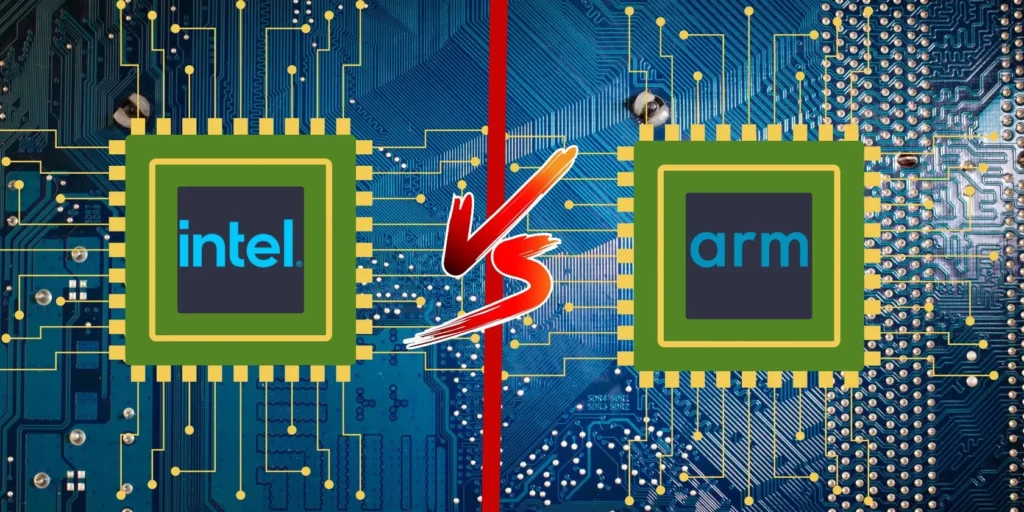
On the other hand, ARM processors can rival X64 processors in terms of energy efficiency and performance per watt. Although their architecture is generally considered less complex than that of X64 processors, ARM processors can excel in scenarios where energy consumption is a major issue, such as mobile devices, embedded systems and IoT (Internet of Things) devices.
Did you find this article helpful?
Share it so others can benefit from it.
Learn more about the author
