Désactiver les applications qui se lancent au démarrage de Windows

Disable applications that launch at Windows startup

One of the most common factors slowing down a computer is the number of applications that launch automatically when Windows starts up. These programs, which you don’t use systematically, consume resources as soon as you switch on your PC, which can considerably lengthen start-up time and reduce your system’s overall performance. In this article, I’ll show you how to disable them.

Disable applications that launch at Windows startup
Happy reading

Why disable startup applications?

Every application that launches on start-up uses up some of your computer’s RAM and processing power. The more applications you have running automatically, the harder your system has to work. By deactivating non-essential applications, you free up resources that can be used by the programs you actually use.

Disable startup applications from Settings

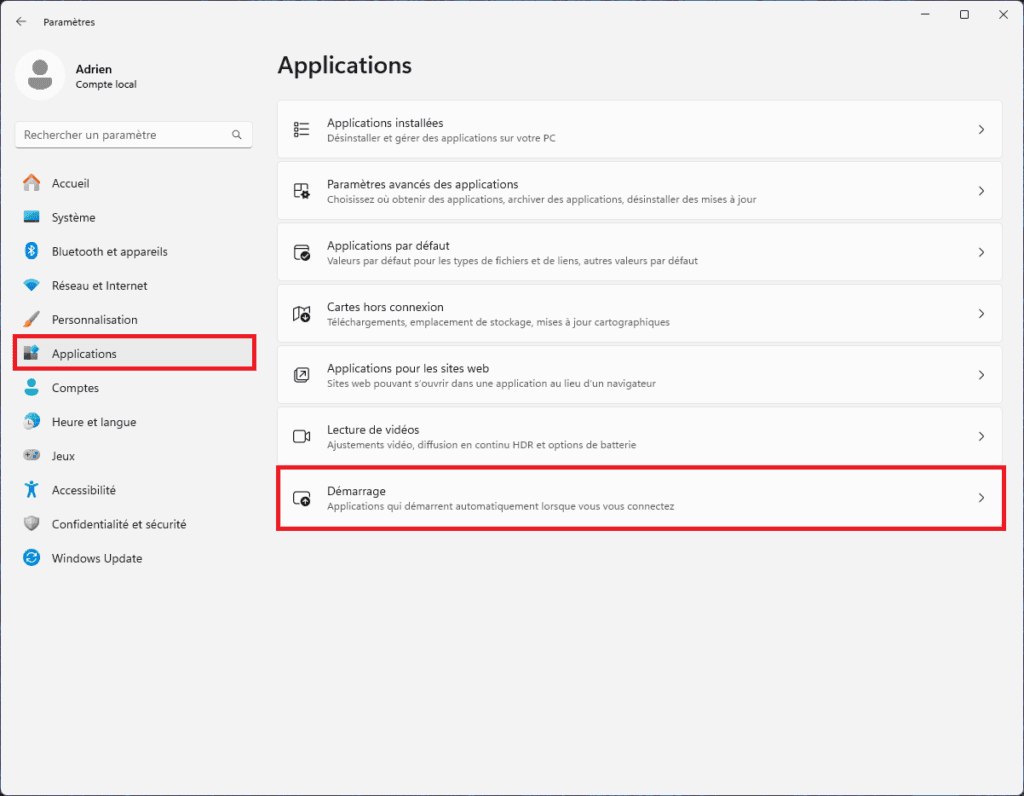
  1. Enter Windows 11 Settings.
  2. In Applications, click on Startup.
Images are displayed when advertising is allowed.
settings windows applications startup
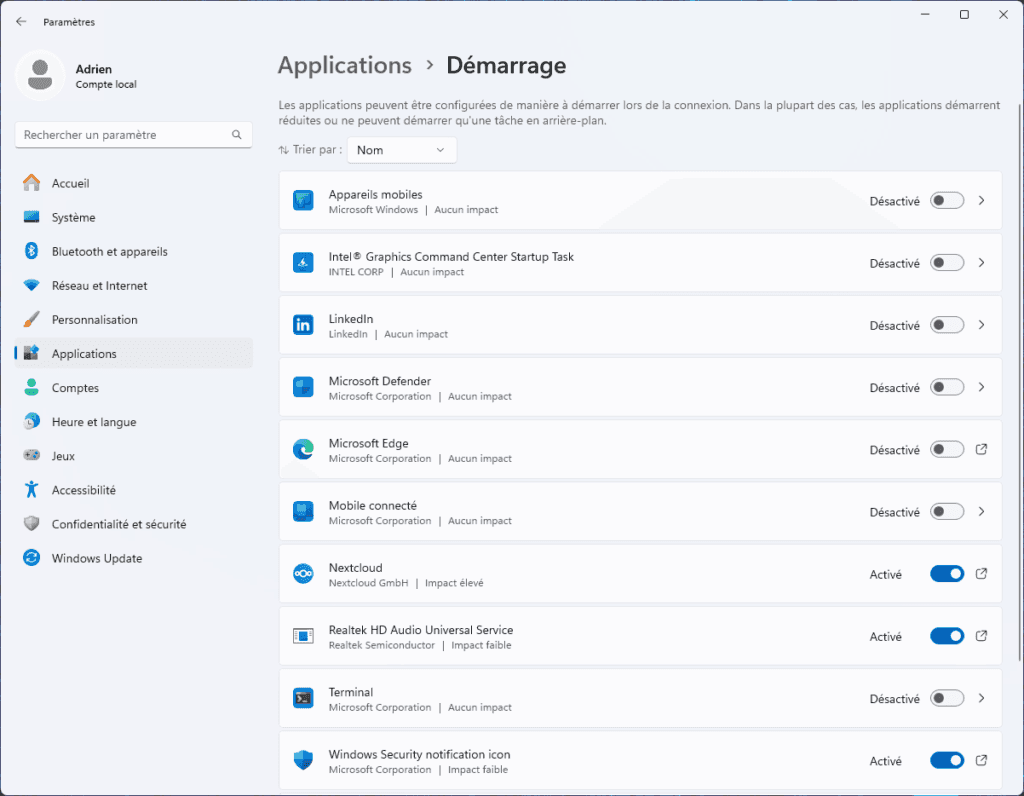
  1. Simply deselect applications that you don’t use and that are not essential to the system.
Images are displayed when advertising is allowed.
Disable startup applications from Settings

Disable startup applications from the task manager

  1. Open the Task Manager by pressing Ctrl + Alt + Delete to open it directly.
Images are displayed when advertising is allowed.
Disable startup applications from the task manager
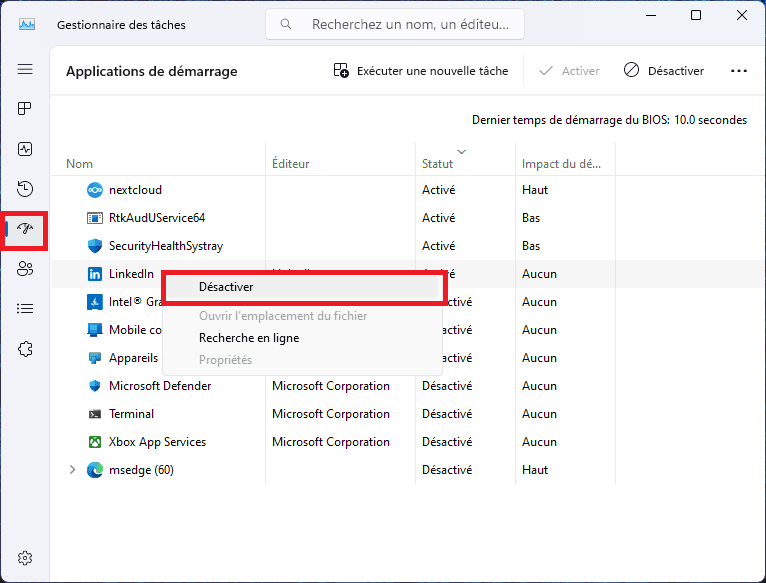
  1. Once the Task Manager is open, click on the Startup tab.
  2. Select an application that you no longer wish to be automatically launched when Windows opens, then click on the Disable button in the bottom right-hand corner of the window.

And that’s it! With just a few clicks, you can optimize your system’s start-up and boost performance. Now it’s up to you!

To discover more tips and tricks on how to optimize your PC, keep following our computer blog. We regularly share practical information to help you get the most out of your technology.

The articles everyone is reading right now

Disabling unnecessary services in Windows : Services list and guide
Popular

Disabling unnecessary services in Windows : Services list and guide

Speed up your Windows PC by disabling unnecessary services. A step-by-step guide to optimizing performance and freeing up system resources.

Is your low-cost Windows license legal? Scam or bargain?
Popular

Is your low-cost Windows license legal? Scam or bargain?

Buying a cheap Windows license: legal or risky? Find out the truth about cheap licenses and avoid scams.

DISM: Repair Windows 10/11 system files and images
Popular

DISM: Repair Windows 10/11 system files and images

Repair Windows system files and images with DISM GUI. Enjoy a fully operational computer.

Create bootable USB media to install Windows 10 on your PC
Popular

Create bootable USB media to install Windows 10 on your PC

Install Windows 10 easily using a USB key and our detailed step-by-step guide for novices and experienced users alike.

Windows 11 challenges WinRAR: does native support for RAR files measure up ?
Popular

Windows 11 challenges WinRAR: does native support for RAR files measure up ?

Windows 11 takes on WinRAR with its native support for RAR files. Full analysis of whether the integrated solution meets your compression and decompression needs

Installing and activating Hyper-V on Windows 11 Home with PowerShell

Installing and activating Hyper-V on Windows 11 Home with PowerShell

Find out how to activate Hyper-V on Windows 11/10 Home with PowerShell. Follow our guide to using virtualization without upgrading to Windows Pro.

Hyper-V is a type 1 hypervisor, not a type 2 hypervisor

Hyper-V is a type 1 hypervisor, not a type 2 hypervisor

Hyper-V is often mistaken for a type 2 hypervisor. Find out why it's actually a type 1, integrated into Windows but running on hardware.

Scroll to Top