How to recover the current Windows wallpaper
Popular

How to recover the current wallpaper under Windows 11 / 10?

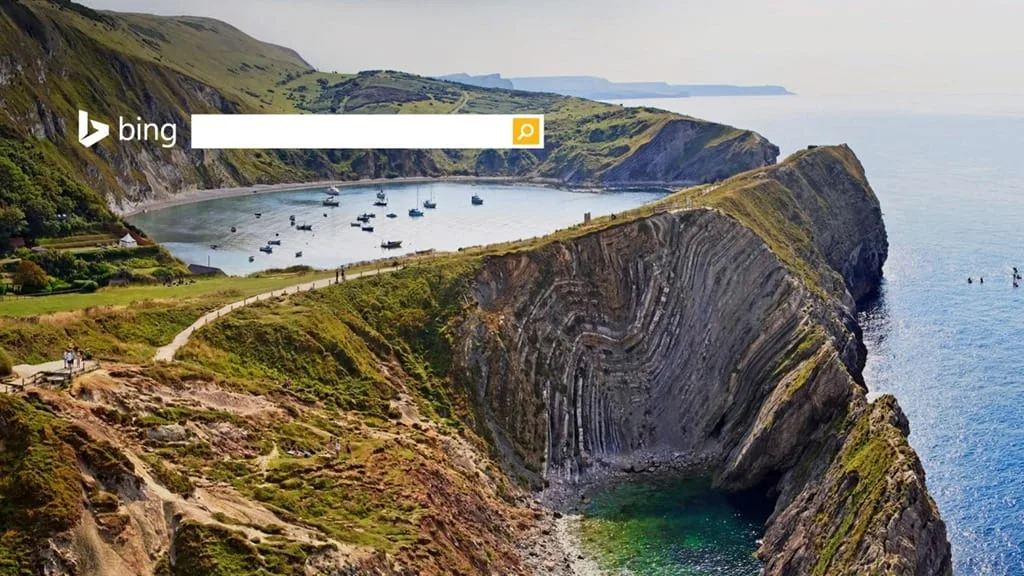
Have you fallen for your beautiful wallpaper? Are you fascinated by one of Bing’s automatic slideshow wallpapers? But beware: it changes every day, and you risk losing it forever! Fortunately, there’s an easy way to save it.

How to recover your current Bing wallpaper?

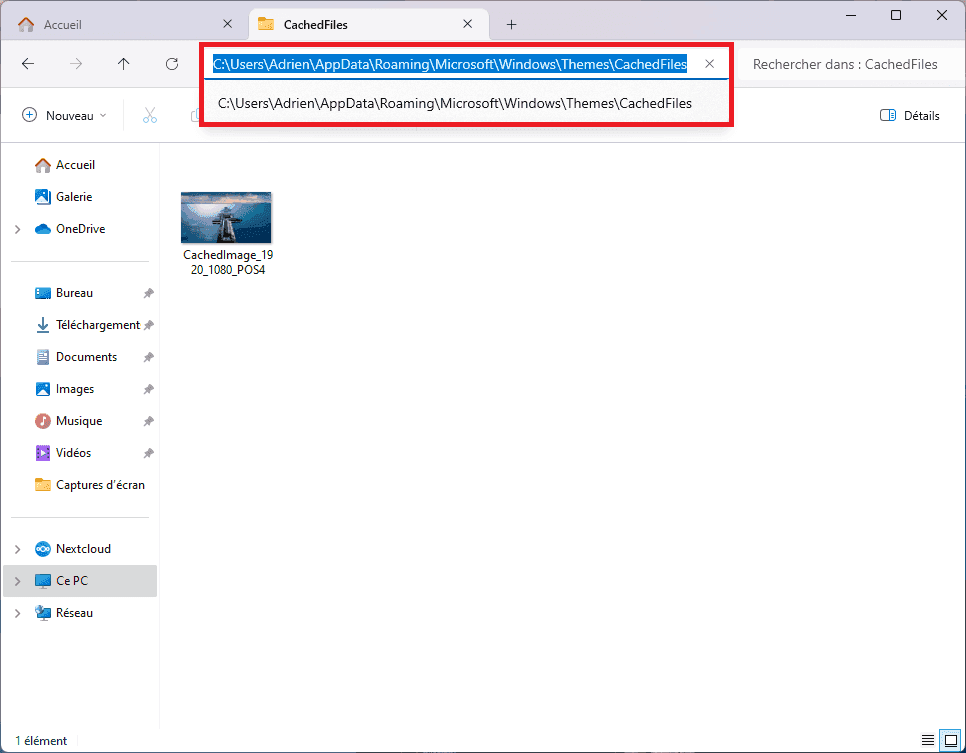
When you set a wallpaper, Windows creates a copy and stores it in a hidden location on your system.

On Windows 10, the old location for cached wallpapers (especially for those set via themes or downloaded via Windows Spotlight) was :

C:\Users\Adrien\AppData\Local\Microsoft\Windows\Themes\CachedFiles

This folder contained a copy of the active wallpaper as an image file. However, Microsoft has removed this location in recent versions of Windows 10 and Windows 11. The active image is now stored in :

C:\Users\Adrien\AppData\Roaming\Microsoft\Windows\Themes

Replace Adrien with the name you use to access Windows.

In this folder, the TranscodedWallpaper file is the currently applied wallpaper. However, it has no default extension. To display it correctly :

  1. Copy this file elsewhere (e.g. to the desktop).
  2. Rename it TranscodedWallpaper.jpg.
Save current wallpaper Windows 11
  1. All you have to do is copy the image and paste it elsewhere on your computer for safekeeping.

Find the current wallpaper location with PowerShell

Open PowerShell and run this command:

Get-ItemProperty -Path 'HKCU:\Control Panel\Desktop' | Select-Object -ExpandProperty WallPaper

The full path of the active wallpaper will be displayed.

C:\Users\Adrien\AppData\Local\Packages\MicrosoftWindows.Client.CBS_cw5n1h2txyewy\LocalCache\Microsoft\IrisService\8657288525238303659\133852161860550586.jpg
Where are the hidden Windows wallpaper files?

Windows wallpaper hidden files are stored in a system folder accessible via File Explorer. To find them, simply navigate to the user directory and search in the Windows theme settings.

The articles everyone is reading right now

DISM: Repair Windows 10/11 system files and images
Popular

DISM: Repair Windows 10/11 system files and images

Repair Windows system files and images with DISM GUI. Enjoy a fully operational computer.

How to disable visual effects and animations on Windows 11
Popular

How to disable visual effects and animations on Windows 11

Deactivate visual effects that can slow down your Windows computer and enjoy better performance.

Windows 10: ESU now available to consumers after the end of support in 2025
Popular

Windows 10: ESU now available to consumers after the end of support in 2025

Windows 10: everything you need to know about the ESU program to keep receiving security updates and avoid vulnerability risks.

Windows 11 challenges WinRAR: does native support for RAR files measure up ?
Popular

Windows 11 challenges WinRAR: does native support for RAR files measure up ?

Windows 11 takes on WinRAR with its native support for RAR files. Full analysis of whether the integrated solution meets your compression and decompression needs

Install Windows 11 on an incompatible PC in 2025: Force the upgrade
Popular

Install Windows 11 on an incompatible PC in 2025: Force the upgrade

Bypass hardware limitations and install Windows 11 on a non-compatible PC in 2025 to enjoy Microsoft's latest operating system.

How to disable the webcam on your Windows PC?

How to disable the webcam on your Windows PC?

Prevent unintentional activation of your webcam! Follow our practical guide to easily disable the built-in webcam on your Windows laptop.

Hyper-V is a type 1 hypervisor, not a type 2 hypervisor

Hyper-V is a type 1 hypervisor, not a type 2 hypervisor

Hyper-V is often mistaken for a type 2 hypervisor. Find out why it's actually a type 1, integrated into Windows but running on hardware.

Scroll to Top