

The days when gaming on Linux meant compiling your own kernel and hoping Wine would not crash at startup are over. Today, Steam, Proton and Valve’s involvement have turned Linux into a credible alternative to Windows.
However, choosing the right starting distribution makes all the difference. Some include NVIDIA graphics drivers, optimisation tools and third-party launchers out of the box, while others still require more hands-on configuration.
Here is a comparison of today’s systems for turning your PC into a gaming console without spending three hours in the terminal.
In this article
Arch Linux is the most widely used Linux distribution on Steam
Arch Linux is now the reference for gaming with Linux on Steam. SteamOS, the Steam Deck operating system, is built on Arch Linux, making it the most widely deployed foundation for Linux gaming. Its model enables rapid integration of the latest graphics drivers and technologies, which explains its strong support among players.
Arch Linux is also the basis for many gaming-focused distributions, including Bazzite OS and CachyOS. These systems inherit Arch’s modernity and speed while offering a refined gaming experience. They help bring the Arch ecosystem to an increasingly broad audience.
1. SteamOS: a platform designed for gaming on Linux
SteamOS has gradually become a cornerstone of Linux gaming. Designed by Valve, it offers a clean experience focused on games, where interface, performance and stability come together in a first-class Linux gaming platform. SteamOS erases the traditional boundary between PC and console by providing players with a dedicated environment.

Its architecture is based on Arch Linux, a strategic choice that gives it strong responsiveness to hardware and software changes. This technical foundation enables rapid adoption of the latest Linux kernel, graphics drivers and gaming technologies. Thanks to deep integration with Proton and the Steam ecosystem, compatibility with games originally designed for Windows has reached a notable level of maturity.
Popular with players, SteamOS benefits from sustained development and continuous improvements that strengthen its long-term credibility. It is more than a showcase: it is a complete solution for demanding gamers and for anyone seeking a frictionless experience.
2. CachyOS: pursuing performance on Linux
CachyOS targets experienced players by focusing on performance. Based on Arch Linux, it stands out through extensive work on the kernel, compiler toolchains and system scheduling, with the goal of reducing latency and fully using the hardware. This technical rigour gives CachyOS the responsiveness sought by gamers who want to optimise every part of their environment.
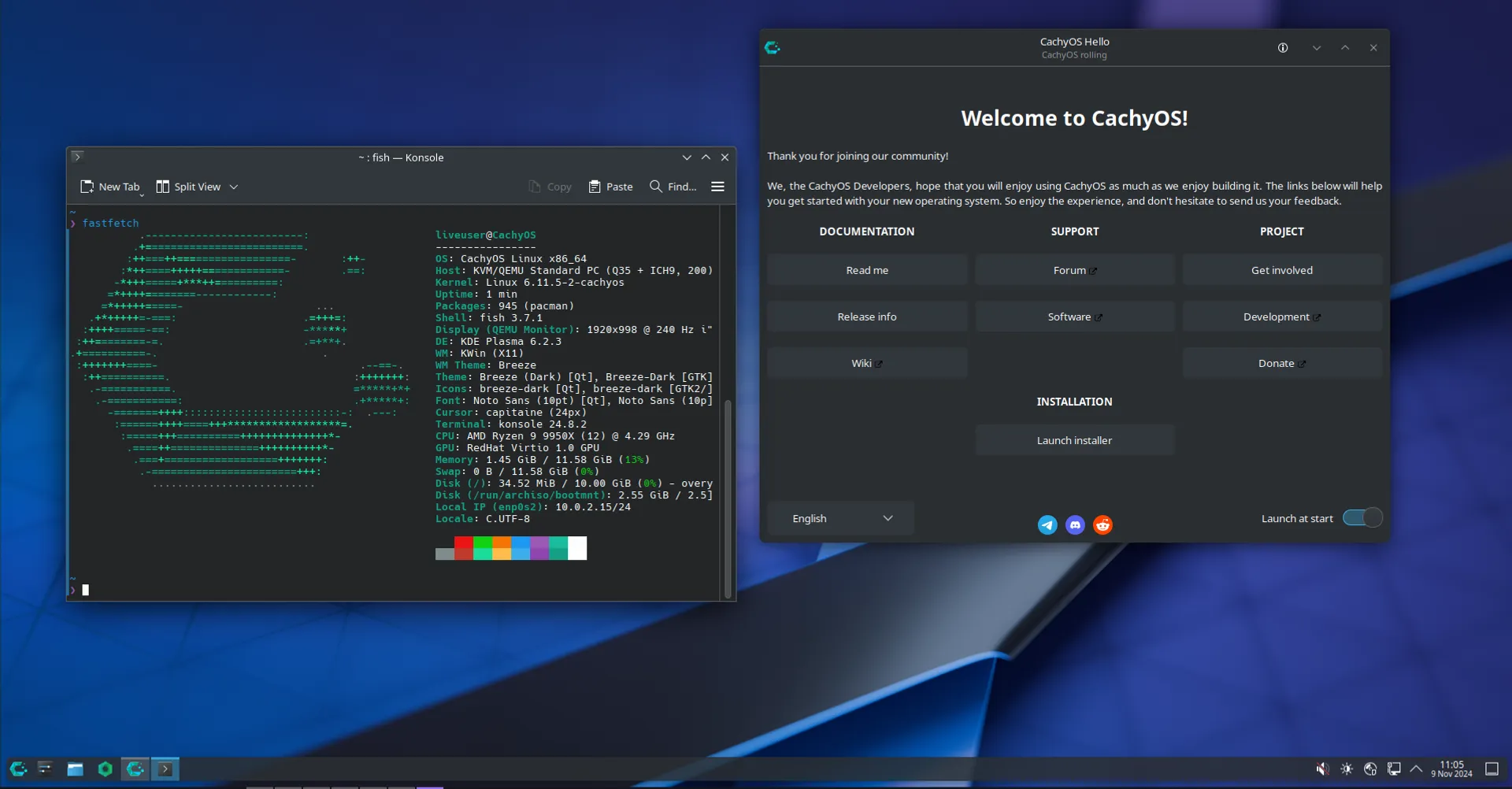
The experience relies on careful integration of the technologies essential to Linux gaming, recent graphics drivers and compatibility tools. Driven by constant development and an involved community, the distribution is a distinctive choice at the intersection of performance and a decidedly technical Linux philosophy.
3. Bazzite: a mature alternative to SteamOS
Bazzite is a credible alternative to SteamOS, offering a system designed primarily for gaming without being limited to console use. Users can focus on games rather than configuration. Built on the solid foundation of Fedora, Bazzite benefits from modern, maintained infrastructure. This foundation supports recent graphics drivers, Proton and the most widely used game launchers. Its immutable operating system with atomic updates provides high stability and the ability to roll back after a problem. Read our Bazzite OS guide.
Bazzite also includes a dedicated gaming mode that can boot directly into a game-focused interface while retaining access to a full desktop when needed. This makes it suitable for living-room PCs, hybrid machines and players looking for a versatile system without compromising the experience.
4. Ubuntu distributions and their variants
Some general-purpose Linux distributions are also excellent gaming foundations, even though they were not designed exclusively for this use. This is the case with Ubuntu and its popular variants (Kubuntu and Lubuntu). Their strength is a stable, well-documented system that can be ready quickly, making them a natural choice for many players.
Ubuntu and its variants benefit from a very rich software ecosystem, simple installation of proprietary graphics drivers, direct access to Steam and proven Proton compatibility. Without gaming-specific optimisations, these distributions can still deliver excellent conditions after minimal setup.
This ease of access explains why Ubuntu remains popular with players who want to discover Linux gaming without excessive complexity. It is aimed at users looking for an operating system that can handle both gaming and everyday work without constraints. Ubuntu and its variants provide a stable, mature and versatile environment for professional or personal use while remaining suitable for gaming.
Don’t let the algorithm decide for you
Add Assistouest to your preferred sources on Google so you can find our guides faster when you search for an IT solution.
Linux gaming: an ecosystem that is now mature
Today, most Linux distributions can provide good gaming conditions thanks to continuous progress in graphics drivers and compatibility technologies. Gaming is no longer limited to a few specialist systems, and a good experience is possible on many foundations.
This comparison focuses on distributions that are easy to use and designed for gaming, performance and accessibility from the first boot. They suit players who want a working system without a long configuration phase. It is also possible to play on Arch Linux after more extensive configuration and a greater technical investment.
An error occurred. Please try again in a moment.