
Windows 12 has been discussed for years. Rumours have assigned it a new interface, demanding hardware requirements and several release dates. Yet Microsoft has never announced Windows 12. It has given no product name, release date or minimum specifications. Instead, Microsoft is continuing Windows 11 development, with version 26H2 planned for late 2026.
Experimental branches for future platforms already exist, but a new Windows technical foundation is not the same thing as a product called Windows 12.
In this article
- Microsoft still has not announced Windows 12
- Windows 11 26H1 and 26H2 show how Windows is evolving
- Microsoft is already testing future-platform builds
- The much-shared Windows 12 interface is not a confirmed interface
- Artificial intelligence is a clearer part of Windows’ future than Windows 12
- Windows 12 minimum requirements are entirely unknown
- Windows 365 will not replace Windows installed on PCs
- What do we know about Windows 12 in 2026?
Microsoft still has not announced Windows 12
Windows 12 does not officially exist as a Microsoft product. The name is mainly used by the media, users and concept creators to describe a possible successor to Windows 11.
The rumour dates in part to 2022, when Windows Central reported that Microsoft was considering a roughly three-year cadence for major Windows changes. That could have meant a new generation in 2024, three years after Windows 11. Microsoft’s plans changed: the major 2024 release became Windows 11 24H2, followed by continued Windows 11 development in 2025 and 2026.
Windows 12 will not launch in 2026
On 27 August 2026, Microsoft released Windows 11 version 26H2 to the Release Preview channel of the Windows Insider programme. Microsoft explicitly describes it as the annual Windows 11 update and expects general availability later in 2026.
Version 26H2 is not a major technical break. It shares the servicing branch used by Windows 11 24H2 and 25H2 and will be delivered as a small enablement package. Features continue to arrive across Windows 11 releases through monthly updates. Windows Central also disputed reports of a modular, AI-centred Windows 12 in 2026: Microsoft is focusing on Windows 11 this year. A 2026 Windows 12 release can therefore reasonably be ruled out.
Windows 11 26H1 and 26H2 show how Windows is evolving
Windows naming is unusual in 2026 because both Windows 11 26H1 and Windows 11 26H2 exist. Version 26H1 has shipped with selected new computers since February 2026. Microsoft says it was designed for a new generation of ARM hardware and is not intended as an upgrade for Windows 11 24H2 or 25H2 PCs; the first devices use Qualcomm Snapdragon X2 processors.
Windows 11 26H2, by contrast, is the annual update for existing Windows 11 computers. Their coexistence shows that Microsoft can change Windows foundations independently from the large, user-visible updates.
Microsoft is already testing future-platform builds
In 2026 Microsoft created an Experimental Future Platforms branch in Windows Insider. On 27 July it released build 29634.1000 there, while other 29xxx builds also appeared during the year. Microsoft is necessarily preparing the changes that follow current Windows 11 versions, but their commercial name remains unknown.
The much-shared Windows 12 interface is not a confirmed interface
You may have seen images of a Windows desktop with a floating taskbar, system information in the top corners and a centred search area. This design did originate at Microsoft: it briefly appeared at Ignite 2022 and was described by Windows Central at the time as an exploration for a future Windows release.
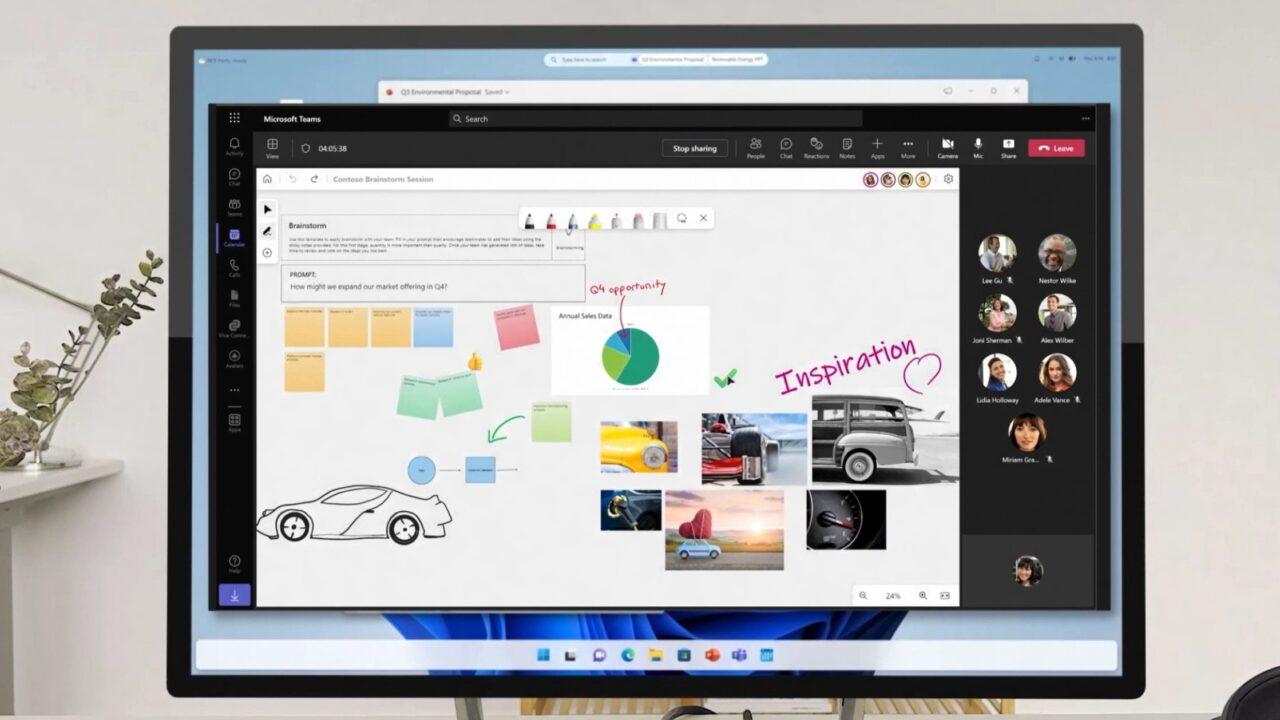
Microsoft never presented it as Windows 12, however; it was an old prototype. Most Windows 12 screenshots on YouTube, Reddit and social networks are designers’ concepts, not evidence of a Microsoft system in development.
Artificial intelligence is a clearer part of Windows’ future than Windows 12
The one certain change is AI’s growing role in Windows. Microsoft launched Copilot+ PCs in 2024 and has progressively expanded their features. These computers include an NPU to run some AI workloads locally. Microsoft uses NPUs for Recall, Click to Do, Windows Studio effects, some translation features and other on-device processing.
This direction is likely to continue whatever name Microsoft uses for future Windows releases. CPUs and GPUs remain essential, but the NPU is becoming a third important component in new PCs. Microsoft currently maintains both conventional Windows 11 PCs and a distinct Copilot+ PC category.
Windows 12 minimum requirements are entirely unknown
There are no official minimum requirements for Windows 12. Claims of 16 GB of RAM, 256 GB of SSD storage and a 40 TOPS NPU are actually Copilot+ PC specifications, not general Windows requirements.
If another Windows generation arrives, retaining some Windows 11 requirements—UEFI, Secure Boot and TPM 2.0—would be logical, and newer processors might be needed. But a higher mandatory RAM amount, an obligatory SSD or an obligatory NPU for Windows 12 are all speculative. Microsoft could reserve AI features for NPU-equipped PCs while keeping Windows running on older hardware, as it does with Windows 11 and Copilot+ PCs today.
Windows 365 will not replace Windows installed on PCs
The idea that Microsoft will move Windows entirely to the cloud is often overstated. Windows 365 provides a Cloud PC: a Windows machine hosted in Microsoft infrastructure and reachable from different devices. Microsoft describes this as an evolution from a solely device-bound system towards computing that can be local and cloud-hosted.
Windows 365 is nevertheless designed for organisations, not offered as a consumer service for individuals. Microsoft also continues actively developing Windows 11 for physical PCs. The realistic future is not the imminent disappearance of local Windows, but a closer coexistence of physical PCs, cloud services and AI.
What do we know about Windows 12 in 2026?
| Information | Current situation |
|---|---|
| Microsoft announced Windows 12 | No |
| Official release date | No |
| Launch in 2026 | Very unlikely; contradicted by the current roadmap |
| Windows 11 26H2 in 2026 | Confirmed by Microsoft |
| Future Windows platforms in Insider | Confirmed |
| Those builds are Windows 12 | Not confirmed |
| 40 TOPS NPU requirement | Currently applies to Copilot+ PCs only |
| 16 GB RAM and SSD requirement | No evidence |
| More AI in the next Windows | Very likely |
| Entirely cloud-hosted Windows | No consumer plan announced |
Internal projects, new development branches and hardware changes show that Windows continues to evolve. Local AI, NPUs, Windows on ARM, new processor generations and cloud integration will likely all matter in the coming years.
We allow some readers to view our articles for free with an ad blocker. However, their number is currently too high for us to keep this access available to everyone.
You can disable your ad blocker to continue reading immediately, subscribe to enjoy all our content without ads, or come back a little later when the pressure has eased.
Access will be restored automatically as soon as the situation allows.