Changing operating systems or troubleshooting a computer usually means finding an empty USB drive, downloading a writing utility, waiting for the ISO image to be written, then starting again whenever another tool is needed. If you maintain several computers, drawers soon fill up with hastily labelled USB drives.
Ventoy is an open-source utility that lets you boot several operating systems from one USB drive. Instead of formatting the drive for every new system, you install Ventoy once. You can then copy ISO files—Windows, Linux or diagnostic tools—straight to it in File Explorer, just as you would to an external drive.
When the computer starts, Ventoy displays a menu listing the available systems. You can add, organise or delete operating systems in seconds without changing the rest of your files.
In this article
What is Ventoy?
Ventoy is a free, open-source utility that makes bootable USB drives much easier to create. With traditional methods, every ISO needs its own formatting and preparation. Ventoy lets you copy ISO files directly to a USB drive and makes them bootable immediately. It is therefore especially useful for multiboot drives and for keeping several operating systems together.
Ventoy sits between the USB drive and the ISO files placed on it. Its installation creates a dedicated partition with a universal boot environment, so each ISO added afterwards is recognised without extra configuration.
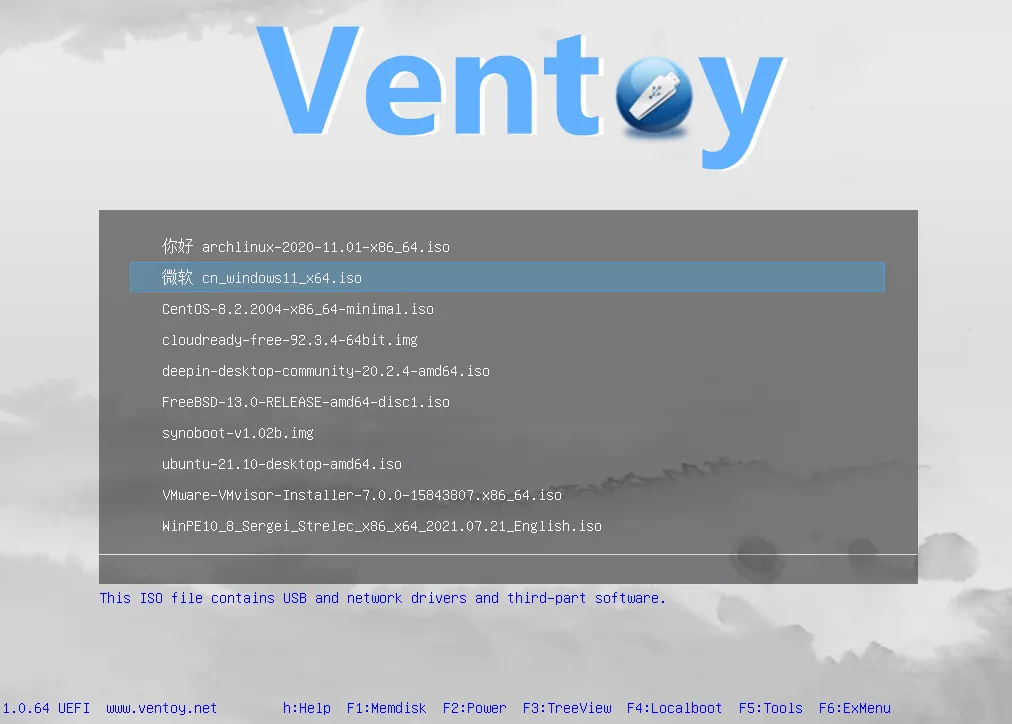
When a computer boots from a Ventoy drive, the menu lets you choose an operating system, recovery image or other utility from the ISO files available.
Create a multiboot USB drive with Ventoy
Creating a bootable USB drive is a common task when installing an operating system or maintaining a computer. Tools such as Rufus normally format the drive, extract an ISO image and add the files needed to make it bootable. Ventoy greatly simplifies this workflow.
One drive can contain several ISO files: different Windows versions (Windows 7, 10 and 11), Linux distributions such as Ubuntu, Debian and Fedora, and system or hardware diagnostic tools.
With Ventoy, simply copy the ISO files to the USB drive; the software handles the bootability.
Install Ventoy on your USB drive
Installing Ventoy creates bootable media that can hold several ISO files without writing each one separately. It makes operating-system and repair-tool management far easier.
Use a USB drive of at least 8 GB; 16 GB or more is recommended for multiple ISO files. Every file already on the drive will be erased, so back it up first.
- Insert the USB drive into an available port.
- Go to the official Ventoy website and download the version for your operating system.
- Extract the ZIP archive and run Ventoy2Disk.exe as administrator.
- Select the correct USB drive in Ventoy, then click Install.
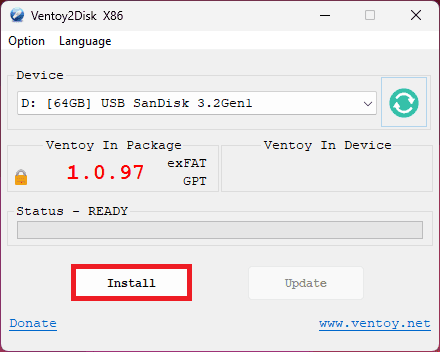
Check carefully that the right drive is selected, especially when more than one USB drive is connected. Ventoy displays warnings because all data on the selected drive will be removed. Once it is finished, it confirms that the installation succeeded.
Don’t let the algorithm decide for you
Add Assistouest to your preferred sources on Google so you can find our guides faster when you search for an IT solution.
Copy ISO files to the USB drive
- Open File Explorer and locate the ISO images you want to transfer.
- Drag and drop, or copy and paste, the Windows, Linux or other ISO files directly to the USB drive.
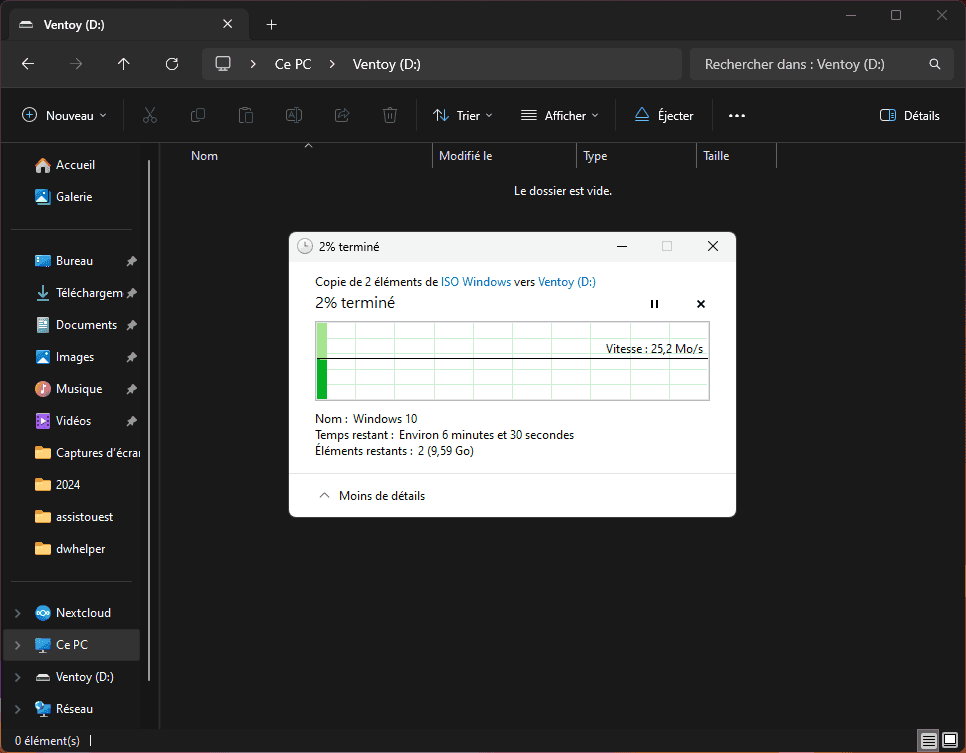
Nothing else is required: Ventoy will recognise the ISO files. When starting a computer, open the boot menu—usually F12, Esc, F2, F9 or Del depending on the manufacturer—choose the USB drive and then the ISO to run.
Can you delete or replace ISOs on a Ventoy drive?
Yes. Ventoy works like an ordinary file system. Delete an ISO in File Explorer as you would any other file; to replace it, remove the old ISO and copy the new one, or overwrite it with the same filename. You can also add more ISO files whenever there is enough free space.
Which ISO files does Ventoy support?
Ventoy supports most common ISO files: Windows 7, 10 and 11; Linux distributions such as Ubuntu, Fedora and Debian; specialised distributions including Kali Linux and Tails; and recovery, backup and diagnostic tools such as Hiren’s BootCD, Clonezilla and MemTest86. It also supports some IMG, WIM and VHD files. Custom ISOs can work too when they meet the required configuration.
The content will unlock automatically after verification.